
Moose-Wilson Corridor
The Moose-Wilson Corridor lies in the southwest corner of Grand Teton National Park and is renowned for its remarkable wildlife and habitat diversity. In March 2026, National Park Service (NPS) officials were ordered to revisit a proposal to build a paved pathway through the heart of the Corridor. If approved, the pathway could cause habitat loss and fragmentation, degrade ecological community resources and values, and pose safety risks for both wildlife and humans. JHCA opposes constructing a pathway through this Corridor and will continue to push back against top-down decisions that are detrimental to our local ecosystems and wildlife.
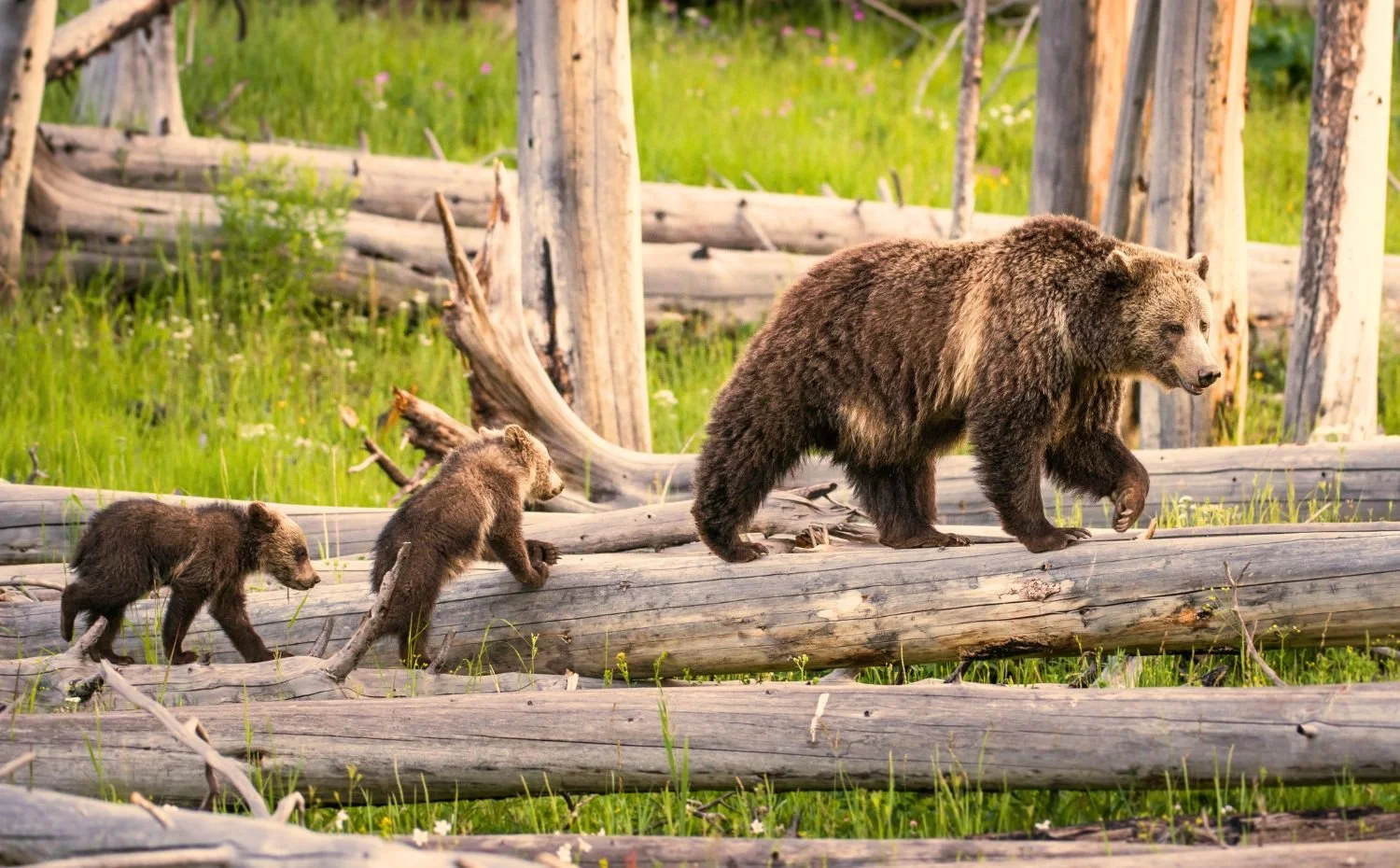
A grizzly bear and cubs walk through the forest.
Why It Matters
NPS already invested millions of dollars to complete an extensive research and review process (an Environmental Impact Statement) for the Moose-Wilson Corridor. The outcome of that review process determined a pathway would disrupt wildlife habitat and behavior, lead to net increases in ecological disturbances, lead to habitat loss and fragmentation, diminish the quality and integrity of ecological community resources and values, and have potential for increased instances of negative human-wildlife interactions.
JHCA supports pathways throughout our community that are planned responsibly and put wildlife integrity first. The Moose-Wilson Corridor is an outstanding representation of the Park’s major natural ecological communities and resources. Grizzly bears, moose, wolves, and other species frequent the corridor. Forests, sagebrush flats, wetlands, and rivers abound. We will continue calling on our elected officials to advance policy that protects these critical wildlife corridors – and deflect pressures that threaten to fragment and degrade this irreplaceable landscape. The health and resilience of this corridor are essential not only for wildlife, but for the future of our community and the Greater Yellowstone Ecosystem.
How JHCA is Involved: Advocacy
JHCA has advocated for responsible management of this issue since it was first proposed in 2012. We helped secure a letter from the Teton County Board of Commissioners urging Grand Teton National Park to prioritize wildlife and cultural resources throughout the planning process. In response to our science-backed advocacy, the National Park Service selected a corridor alternative that excluded a proposed multiuse path, limiting some negative impacts.
We continue to collaborate with and bolster leading organizations like Friends of Moose-Wilson Corridor who advocate for responsible outcomes, monitor new developments, and keep the community informed. Our role is to ensure residents understand what is at stake and have the information they need to engage in the process.
Status:
October 2026: Teton County, WY, sent a letter to the Secretary of the Interior asking for formal consultation as a cooperating agency, and a reconsideration of the decision to approve a pathway. (Letter linked below)
Timeline:
2013
Moose-Wilson Corridor Comprehensive Management Plan / EIS begins
60-day public comment period opens; JHCA submits comment
Public meeting held (attended by 187 people)
2014
Alternative Corridor designs developed
2,605 comments received
Second public meeting held
2015
Draft Environmental Impact Statement released for public review
Draft Comprehensive Management Plan (Plan) released for public review
NPS selects Alternative C as the preferred alternative
Third public meeting held in Jackson, WY
2016
Completion of 92-day comment period on Draft Plan and EIS
NPS releases Final EIS, selects Alternative C as preferred alternative
2016-2024
NPS begins and implements realignment of Moose-Wilson Road.
2025-2026
NPS is ordered to review policy and decision to construct a pathway through the Corridor
Draft Programmatic Agreement released for public comment; JHCA provided comment; comment closed July 9, 2026
Decision to pursue pathway released August 17, 2026
Get Involved
Support Friends of Moose-Wilson Corridor, donate through JHCA: Add a note on your donation, and we’ll make sure the funding is directed appropriately.
Email Federal Representatives:
Email Local Representatives:
Arne Jorgensen, Mayor of Jackson
Cc Chip Jenkins, Superintendent of Grand Teton National Park
