
Keep Targhee Inbounds
The U.S. Forest Service is reviewing the proposed expansion and upgrades sought by Grand Targhee Resort in Alta, Wyoming. The proposed expansion would significantly increase the resort’s footprint and year-round operations, with direct negative impacts on wildlife habitat, community, and access to public land. The Forest Service decision will permanently shape the future of this landscape and our communities.
-
Alternative 1: No Action. No new development or upgrades within the current ski area.
Alternative 2: Maximal Action. Full approval of Targhee’s request, including two major expansions:
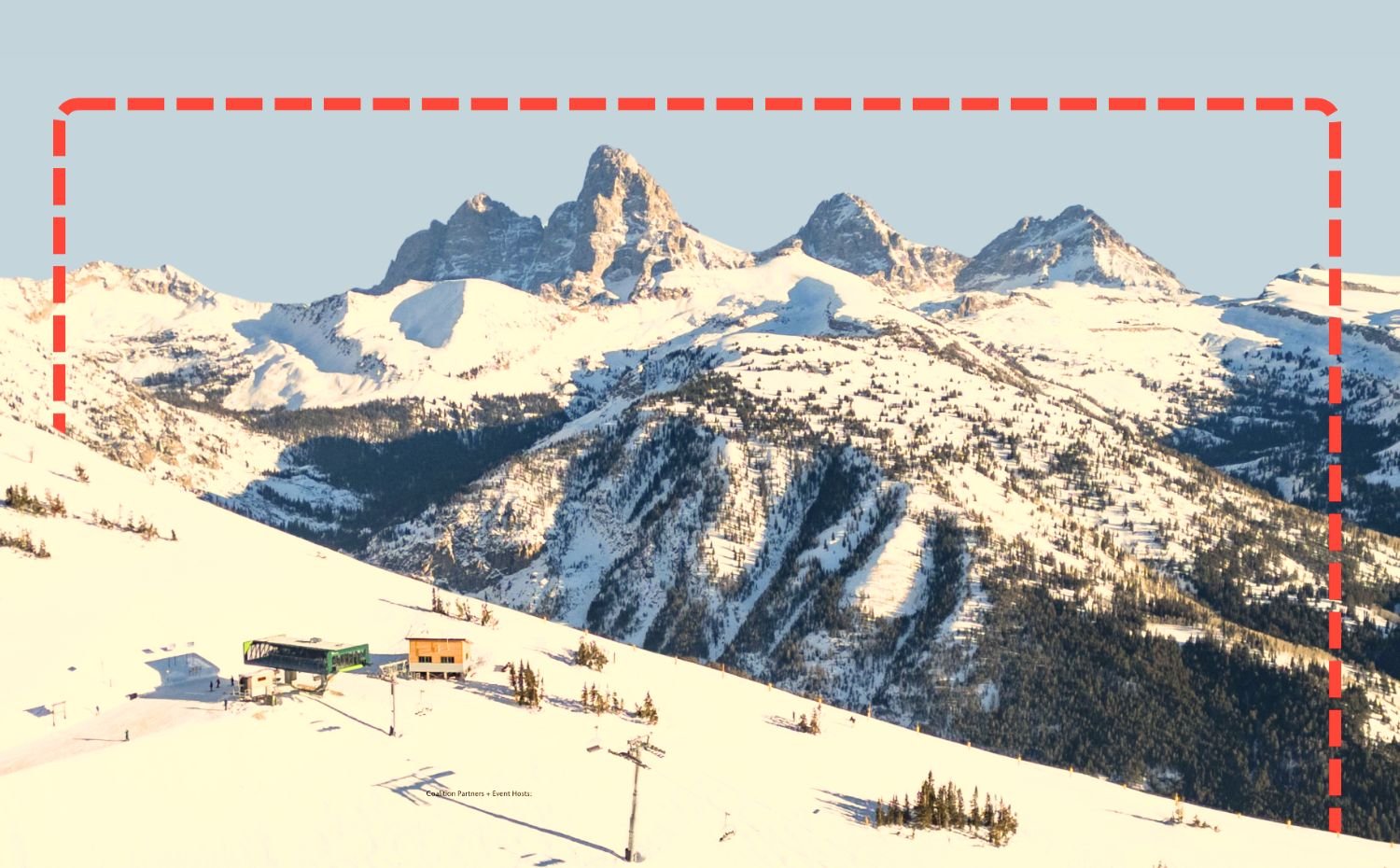
South Bowl Expansion: Would add 266acres to the resort boundary, plus new ski runs, an access road, a lift, a ski patrol building, a vault toilet, a rescue cache, and two avalanche launchers.
Mono Trees Expansion: Would add 600 acres to the resort boundary, plus new ski runs, access roads, a lift, and a mountaintop cabin.
All proposed upgrades within the current ski area.
Alternative 3: All proposed upgrades within the current ski area, with no boundary expansion.
Alternative 4: All proposed upgrades within the current ski area, and the South Bowl expansion.
Alternative 5: All proposed upgrades within the current ski area, and the Mono Trees expansion.
What’s at stake
Alternatives 2, 4, and 5 all include expanding the resort boundary and co-opting public land. Boundary expansion would degrade habitat for sensitive wildlife species, including grizzly bears, wolverines, lynx, and bighorn sheep. Expanding ski terrain, lifts, roads, and infrastructure would fragment habitat, disrupt migration, and harm denning areas.
The proposed alternatives, including expansion, raise broad concerns about public land use and community impact. Increased visitation and year-round operations would strain water resources, intensify traffic on Ski Hill Road, and add pressure to an already limited housing supply in Teton Valley, ID. Expanding the ski boundary displaces backcountry recreation users and alters the region's rural character.
-
Targhee has not shown an adequate justification for privatizing additional public lands. The costs of an expansion would be borne by wildlife and the neighboring community.
Boundary expansion will eliminate secure habitat for grizzly bears, increasing human-grizzly conflict and the probability of grizzly removal (death).
Bighorn sheep, a small, vulnerable population, would lose 54 acres of high-quality winter habitat essential for survival and lose access to the Apostle mineral lick, an important resource.
In the case of expanding into South Bowl, wolverines would lose denning habitat, a detriment to their survival.
If the resort boundary were expanded into Mono Tree, the Canada lynx would lose more than 200 acres of habitat, a serious detriment to their survival.
Proposed tree clearing and lift installation will impact many protected species — GTR is seeking Forest Plan amendments to impact known nesting territories for peregrine falcons, boreal owls, flammulated owls, and American goshawks (and habitat for American three-toed woodpeckers).
Expansion requires re-zoning of both South Bowl and Mono Trees (from visual maintenance to a special-use permit for private economic activity). Let’s not privatize our precious public lands.
The proposed boundary expansion would eliminate critical secure habitat for grizzly bears, increasing human-bear conflicts and raising the risk of bear mortalities.
Construction and operation in the Mono Trees areas would fragment lynx travel corridors and diminish habitat.
Expansion of the resort boundary in South Bowl would destroy high-quality winter habitat essential for the survival of the vulnerable Teton bighorn sheep herd. Increased activity in this area would deter bighorn sheep from accessing the Apostle mineral lick, which is critical to their survival.
Any alternative that expands resort capacity would increase traffic congestion on Ski Hill Road, creating safety hazards and deteriorating the quality of life for Alta and Driggs residents. Existing infrastructure will be overwhelmed, particularly in the winter months when road conditions are already hazardous.
Resort expansion would worsen the critical shortage of affordable housing for workers in Teton County, Idaho, displacing long-term residents. And, escalate second-home purchases, driving up real estate prices and further marginalizing local families.
Any alternative that expands resort capacity would put unsustainable pressure on community services like emergency response, fire, and medical care, none of which are scaled for this level of growth.
The proposed water withdrawals for snowmaking would further stress local aquifers already stressed by agricultural and residential use, with downstream impacts on the community.
Visual impacts from large-scale new development would erode the scenic values that residents and visitors cherish, undermining the rural identity of Teton Valley.
Expanded resort boundaries would limit public access to favorite backcountry skiing, hiking, and biking trails traditionally available to the community.
Waste management from increased visitation is likely to strain local landfill capacity and create new litter and pollution problems.
What we’re doing about it
JHCA is advocating to “Keep Targhee Inbounds.” We are calling for the Bridger-Teton National Forest Service to prevent development beyond Grand Targhee's existing footprint and protect public lands. JHCA is working with regional partners to ensure the Forest Service fully accounts for impacts to wildlife, habitat connectivity, water resources, and community infrastructure. Decisions about public land should be grounded in science, complete data, and long-term stewardship.
Learn more here about our 2025 coalition and campaign events to drive comment writing and community engagement.
Issue Updates
RECENT: All cooperating agencies have filed objections. This is significant. Cooperating Agencies:
Teton County, WY
Teton County, ID
Teton Conservation District
Wyoming Game and Fish Department
Grand Teton National Park
Status:
The U.S. Forest Service released a Draft Environmental Impact Statement (DEIS) outlining five alternatives for the resort’s future.
The public comment period closed on June 20, 2025, with strong regional participation.
The U.S. Forest Service released a Final Environmental Impact Statement (FEIS) and Draft Record of Decision (DROD); objection period closed on July 13, 2026.
The U.S. Forest Service released proposed amendments to the Caribou-Targhee National Forest Forest Plan; objection period closes July 28, 2026.
Objection Resolution Meeting scheduled for September 24, 2026
Timeline:
2024 – Expansion proposal advanced for federal review
2025 – DEIS released; public comment period completed
2026 –
FEIS and DROD released; JHCA submitted objection; objection period closed July 13, 2026
Proposed Forest Plan amendments released; JHCA submitted objection; objection period closed July 28, 2026
Objection Resolution Meeting scheduled for September 24, 2026
2027 – Final decision anticipated
